Is laparoscopic surgery safer than open surgery?
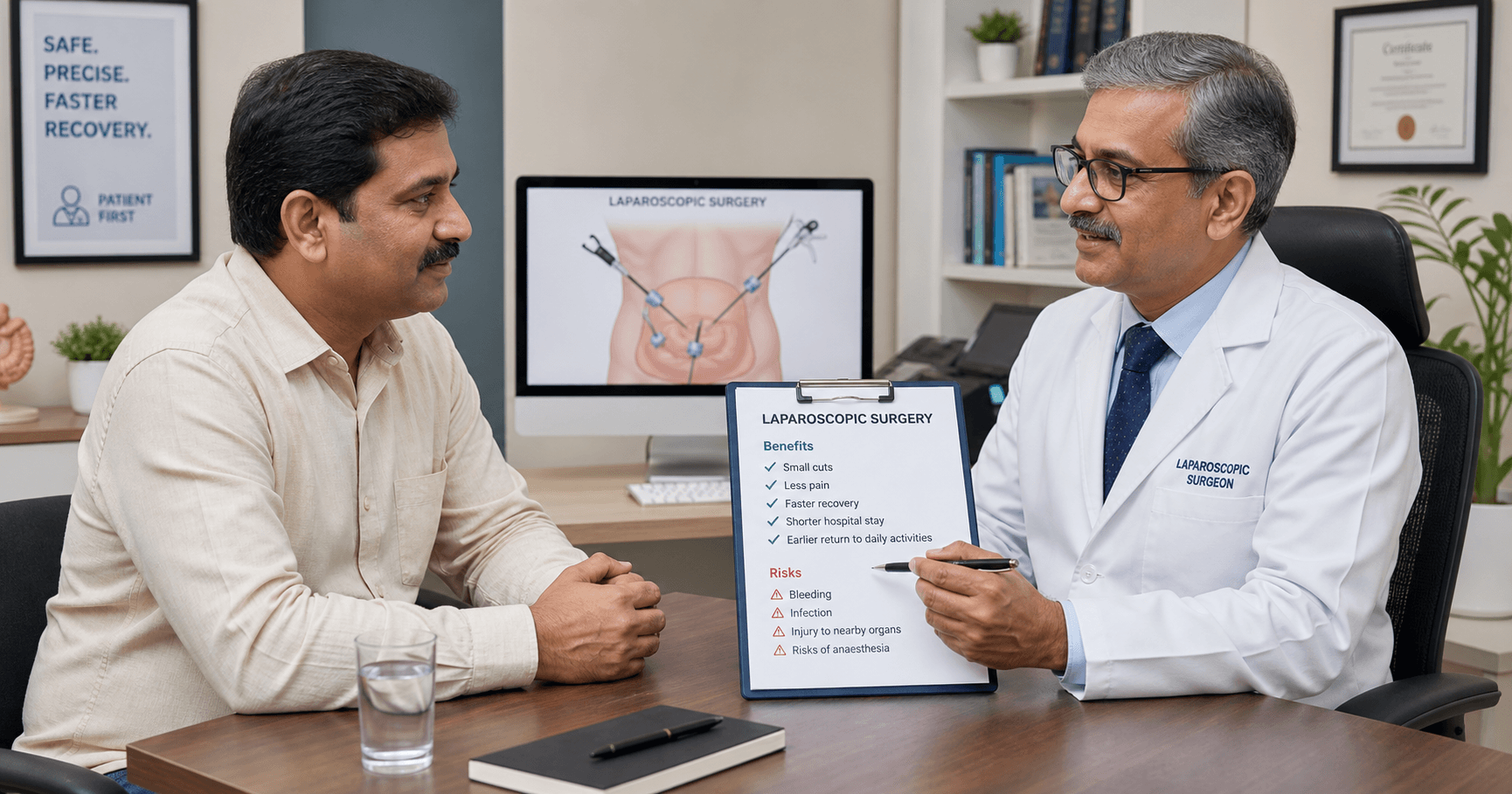
Laparoscopic surgery is often less invasive than open surgery because it uses small cuts, a camera and long instruments. For selected patients, this may reduce wound pain, scarring, hospital stay and recovery time. It is not automatically safer for every condition, so the final choice should follow examination, reports and risk review.
Laparoscopic surgery is keyhole surgery performed through small abdominal incisions using a camera and specialized instruments. It may be used for conditions such as gallbladder stones, appendix problems, hernia repair and selected advanced abdominal procedures when the patient and diagnosis are suitable.
Fast decision rule: do not ask only "Is laparoscopy better?" Ask "Is laparoscopy suitable for my diagnosis, my reports, my previous surgery history and my anesthesia risk?" That question gets you closer to a safe surgical plan.
If you are confused because both endoscopy and laparoscopy use cameras, the focused comparison at /articles/laparoscopy-vs-endoscopy-bhopal explains which questions each procedure usually answers.
What are the main benefits of laparoscopic surgery?
The main benefits can include smaller incisions, less tissue handling, lower wound discomfort, smaller scars, shorter hospital stay and earlier return to light activity. These benefits are most meaningful when the condition is appropriate for keyhole surgery and the operation can be completed safely through small cuts.
Mayo Clinic explains that minimally invasive surgery uses smaller surgical cuts and is often less risky than open surgery, while still carrying surgical risks such as anesthesia complications, bleeding and infection: https://www.mayoclinic.org/tests-procedures/minimally-invasive-surgery/about/pac-20384771.
SAGES patient information on laparoscopic surgery describes common advantages of the laparoscopic approach such as reduced post-operative pain, shorter hospital stay, fewer wound complications, faster return to work and improved cosmetic result in suitable operations: https://www.sages.org/publications/patient-information/patient-information-for-laparoscopic-surgery-for-severe-morbid-obesity-from-sages/.
What risks should patients understand before choosing laparoscopy?
Laparoscopy still involves anesthesia, internal instruments and surgical decision-making. Possible risks include bleeding, infection, blood clots, breathing problems, injury to nearby organs, need for open surgery, delayed recovery, pain, fever, wound problems or complications related to the patient's existing health conditions.
MedlinePlus lists risks of laparoscopic pelvic surgery such as bleeding, blood clots, breathing problems, damage to nearby organs and infection, while noting that laparoscopy can be safer than an open procedure for correcting the problem in that context: https://medlineplus.gov/ency/article/002916.htm.
NHS laparoscopy guidance also explains that recovery time varies and that laparoscopic procedures can involve risks such as damage to organs, bleeding, infection or complications from anesthesia: https://www.nhs.uk/tests-and-treatments/laparoscopy/. These are uncommon in many planned cases, but they should be discussed before consent.
Who may not be the right candidate for laparoscopic surgery?
Some patients may need open surgery, delayed surgery, additional tests or another specialist review. Suitability can change with severe infection, unstable vital signs, complex previous abdominal surgery, major adhesions, very large hernia, bleeding risk, advanced heart or lung disease, pregnancy considerations or unclear diagnosis.
This does not mean the patient is "not fit" in a general sense. It means the surgical route must match the actual risk. A surgeon may still recommend laparoscopy, open surgery, observation, medicines, emergency admission or referral depending on the case.
Decision guide: planned OPD is reasonable for stable symptoms and completed reports; earlier surgeon review is better for increasing pain, vomiting, fever, jaundice, stuck swelling or worsening weakness; emergency care comes first for severe pain, chest pain, breathing difficulty, fainting, confusion, heavy bleeding or a very unwell patient.
How should Bhopal patients compare laparoscopic and open surgery?
Compare laparoscopic and open surgery for the specific condition, not as a general contest. The useful comparison is diagnosis, expected incision, anesthesia plan, hospital stay, pain control, wound care, lifting restriction, work timing, cost factors, conversion possibility and warning signs after discharge.
For example, gallbladder surgery, appendix surgery and many hernia repairs are commonly evaluated for laparoscopic options, but infection severity, anatomy, previous operation scars and medical fitness can change the plan. The same patient may be suitable for laparoscopy for one condition and not for another.
Practical consultation checklist: What is my diagnosis? Is keyhole surgery suitable? What could make open surgery safer? What reports are missing? What anesthesia review is needed? What are the common and serious risks? How many days of rest may I need? Which symptoms after surgery should not wait?
What recovery expectations are realistic after laparoscopy?
Recovery after laparoscopic surgery is often quicker than open surgery, but it is not instant. Patients still need wound care, walking guidance, diet instructions, medicine instructions, lifting restrictions, follow-up and a clear list of symptoms that need urgent medical review.
NHS says recovery from laparoscopy varies: diagnostic laparoscopy may take less time, return to work may take weeks after some procedures, and full recovery after surgery may take longer depending on what was done. The treating surgeon's instruction is more important than a generic online timeline.
Reduce effort before admission by arranging transport, keeping reports together, writing all medicines and allergies, asking about fasting, planning help at home for the first day, and saving the hospital contact number. This small preparation makes the first 24 hours after discharge less confusing.
Which warning signs should not wait after laparoscopic surgery?
After laparoscopic surgery, seek urgent medical help for breathing difficulty, chest pain, fainting, high fever, severe or worsening abdominal pain, repeated vomiting, yellow eyes, heavy bleeding, spreading redness, pus-like wound discharge, confusion, dehydration signs or any patient who looks very unwell.
MedlinePlus after-surgery guidance explains that complications can include infection, too much bleeding, anesthesia reaction or accidental injury, and that the surgeon should explain what the patient can do during the first days, weeks or months after surgery: https://medlineplus.gov/aftersurgery.html.
This article is patient education, not diagnosis, prescription, emergency triage or a substitute for examination. If symptoms are severe, sudden, worsening or different from the discharge instructions, call the treating hospital or go to emergency care instead of waiting for an online answer.
How do you leave the consultation with a clear decision?
A good laparoscopic surgery consultation should end with a clear diagnosis, why surgery is or is not advised, whether keyhole surgery is suitable, what tests are still needed, what risks matter for this patient, what recovery may look like and what symptoms require urgent care.
For Bhopal patients, Dr. Rajesh Kanungo evaluates laparoscopic surgery questions at R.K. Hospital, Indrapuri, including gallbladder stones, appendix symptoms, hernia, piles-fissure-fistula care and selected advanced laparoscopic procedures. Bring ultrasound, CT, blood reports, prescriptions and previous discharge summaries if available.
Patients who want to prepare before OPD can use /articles/questions-to-ask-before-laparoscopic-surgery-bhopal to organize the exact questions about diagnosis, anesthesia, medicines, recovery, estimate changes and emergency warning signs.
The most useful next step is diagnosis-first review, not a price-first shortcut. Once the condition and risk profile are clear, the discussion about laparoscopic surgery, open surgery, timing, cost factors, hospital stay and follow-up becomes much more reliable.
Which medical sources support this guide?
This guide was cross-checked against Mayo Clinic minimally invasive surgery information at https://www.mayoclinic.org/tests-procedures/minimally-invasive-surgery/about/pac-20384771, NHS laparoscopy guidance at https://www.nhs.uk/tests-and-treatments/laparoscopy/, MedlinePlus laparoscopy information at https://medlineplus.gov/ency/article/002916.htm, MedlinePlus after-surgery guidance at https://medlineplus.gov/aftersurgery.html, and SAGES patient information on laparoscopic surgery advantages at https://www.sages.org/publications/patient-information/patient-information-for-laparoscopic-surgery-for-severe-morbid-obesity-from-sages/.
These sources support the same practical message: laparoscopic surgery can reduce recovery burden for selected patients, but it remains surgery and should be chosen after individualized risk review, informed consent and clear post-surgery warning-sign guidance.
Related care options
More patient guides
Types of Abdominal Hernias: A Location Guide for Bhopal Patients
Abdominal hernias are named mainly by where tissue pushes through a weak area: the groin, upper thigh, navel, upper midline, abdominal wall or an old surgical scar. Location is a useful clue, but examination—not a photo or symptom list—is what separates a hernia from other lumps and guides safe treatment.
Can You Live Without a Gallbladder? What Changes After Surgery
Yes. Most people can live a normal life without a gallbladder because the liver keeps making bile. After removal, bile flows directly into the small intestine instead of being stored. Some people notice temporary digestive changes, but persistent or severe symptoms deserve medical review.
Nail Polish Before Surgery: What Should Patients Remove?
Many hospitals ask patients to remove nail polish, gel or false nails before surgery because staff may need access to a natural nail for monitoring and assessment. The safest shortcut is simple: ask the hospital in advance, follow its written instruction, and tell the team if a product or item cannot be removed safely.
Common questions
No. Laparoscopic surgery is useful for many conditions, but open surgery may be safer in some situations. The decision depends on diagnosis, infection, previous surgery, anatomy, anesthesia risk and surgeon assessment.
Possible benefits include smaller cuts, less wound discomfort, smaller scars, shorter hospital stay and earlier return to light activity. These benefits apply when the patient and condition are suitable for laparoscopy.
Risks can include anesthesia problems, bleeding, infection, blood clots, breathing problems, injury to nearby organs, wound concerns, delayed recovery and the need to convert to open surgery in selected cases.
Seek urgent care for breathing difficulty, chest pain, fainting, high fever, severe worsening pain, repeated vomiting, yellow eyes, heavy bleeding, spreading wound redness, discharge, confusion or a very unwell patient.