
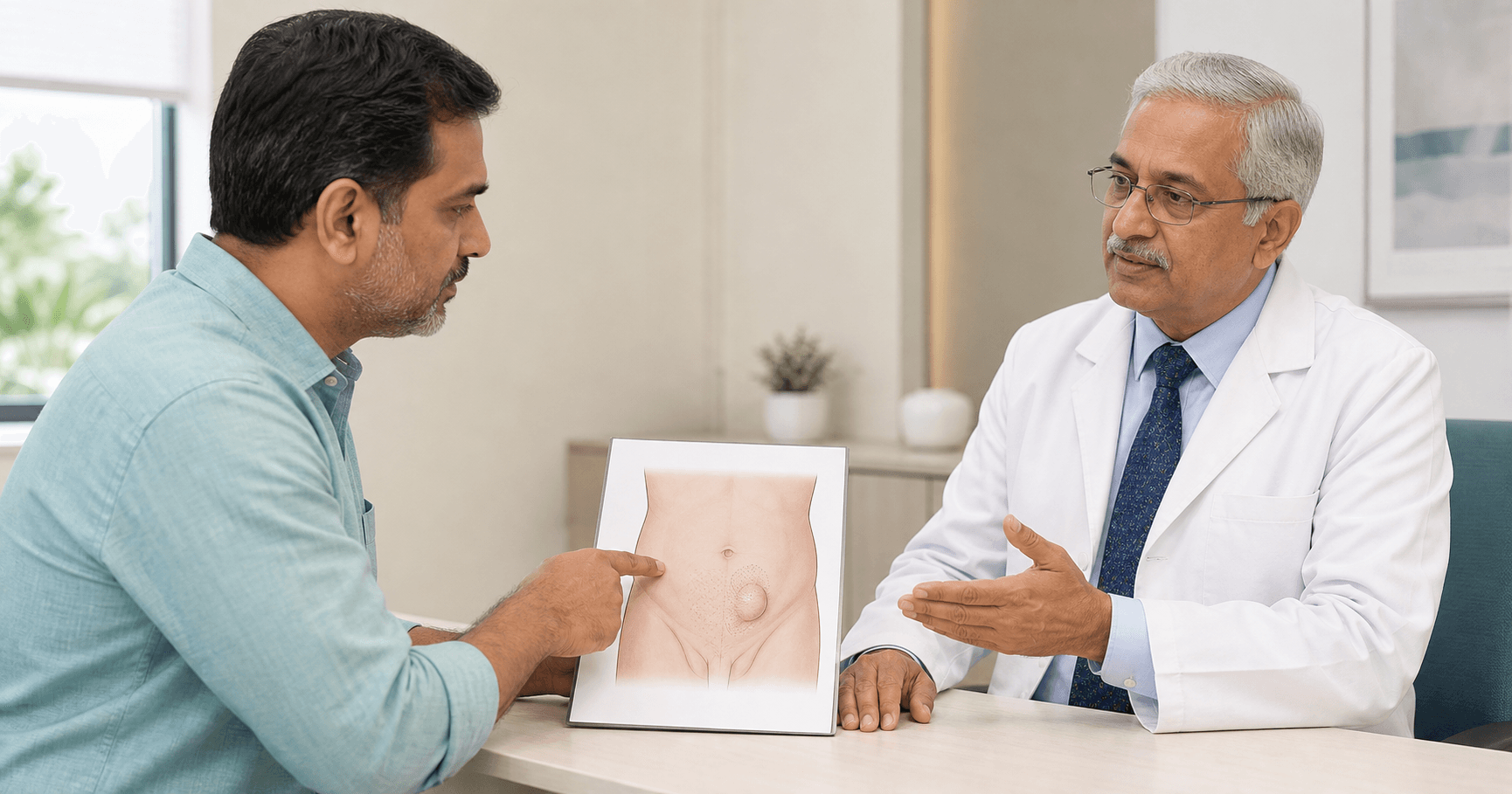
What is a recurrent hernia after surgery?
A recurrent hernia after surgery is a hernia that appears again at or near a previous repair site. It may feel like a returning bulge, heaviness, dragging, cough-related swelling or discomfort after earlier hernia surgery. It should be checked by a surgeon rather than assumed to be normal healing.
A hernia is a bulge caused by tissue pushing through a weak area in the muscle or abdominal wall. A recurrent hernia means that weakness has returned or another nearby weak area has become visible after a previous repair.
Fast decision rule: if the swelling is soft, reducible and the patient is otherwise well, book a planned surgeon review. If the swelling is painful and stuck, or comes with vomiting, fever, skin color change, abdominal bloating or inability to pass gas or stool, use emergency care first.
Why can a hernia come back after repair?
A hernia can come back after repair because recurrence risk depends on hernia type, tissue strength, repair method, infection, smoking, chronic cough, constipation, obesity, diabetes, heavy lifting, previous surgery and how the wound heals. Recurrence does not always mean one simple mistake caused it.
The U.S. FDA explains that surgical mesh is often used to strengthen hernia repair and reduce recurrence risk, but patients should discuss individual benefits and risks with the surgeon: https://www.fda.gov/medical-devices/implants-and-prosthetics/surgical-mesh-used-hernia-repair. Mayo Clinic also notes that diagnosis and treatment decisions for inguinal hernia start with examination and sometimes imaging: https://www.mayoclinic.org/diseases-conditions/inguinal-hernia/diagnosis-treatment/drc-20351553.
Practical examples: a chronic cough can keep increasing abdominal pressure; constipation and straining can stress the repair; uncontrolled diabetes or infection can affect healing; heavy work may need staged return; and a previous open or laparoscopic repair can change the next operation plan.
How do you know if a post-surgery bulge is recurrence or healing?
A post-surgery bulge can come from normal swelling, fluid collection, scar tissue, infection, wound weakness or recurrent hernia. The difference usually needs examination and sometimes ultrasound or CT. Online symptom matching cannot reliably separate these causes at home.
A useful comparison: early swelling after surgery should usually trend down; a recurrent hernia may become more visible on standing, coughing or straining; infection concern rises with fever, redness, warmth, discharge or worsening pain; urgent concern rises when the bulge is stuck, painful or linked with vomiting.
If surgery was recent, call the operating team before assuming recurrence and use /articles/swelling-after-hernia-surgery-seroma-bhopal to prepare the right questions about fluid swelling. If the new bulge follows a different abdominal operation, use /articles/incisional-hernia-symptoms-after-surgery-bhopal to prepare for examination. If surgery was months or years ago and a cough-related bulge has returned, book a hernia review and carry old papers. For general recovery expectations, read /articles/hernia-surgery-recovery-time-bhopal.
Which records should Bhopal patients carry for recurrent hernia review?
Carry the old operation note if available, discharge summary, mesh details if written, previous ultrasound or CT reports, current ultrasound or CT report if done, medicine list, diabetes and BP records, blood thinner details and any wound-infection history from the first surgery. The /articles/hernia-ultrasound-vs-ct-scan-bhopal guide explains why imaging choices differ for straightforward and recurrent hernias.
Checklist for the visit: previous repair date, side and location of hernia, open or laparoscopic approach if known, whether mesh was used, when the new bulge appeared, whether it reduces while lying down, work-lifting demands, cough or constipation history, and any fever, vomiting or pain episode.
If you do not have old papers, still book the review. The surgeon can start with examination and symptom history, then decide whether imaging or additional fitness review is needed before discussing repair options.
What treatment options are discussed for recurrent hernia?
Recurrent hernia treatment options may include planned observation in selected low-risk situations, open repair, laparoscopic repair, mesh-based repair, or a more complex abdominal wall plan. The right option depends on hernia type, previous repair, size, symptoms, medical fitness and urgency.
SAGES patient information explains that inguinal hernia repair may be open, laparoscopic or robotic and commonly involves mesh, with approach depending on the patient and hernia: https://www.sages.org/publications/patient-information/inguinal-hernia-repair-surgery-sages-patient-information/. NHS guidance also describes open and keyhole repair routes for inguinal hernia and emphasizes following hospital advice: https://www.nhs.uk/tests-and-treatments/inguinal-hernia-repair/.
Decision table: first-time small reducible hernia means standard planned discussion; recurrent hernia after prior open repair may raise laparoscopic-route questions; recurrent hernia after prior laparoscopic repair may raise open-route or specialist planning questions; painful stuck hernia means emergency assessment first, not elective comparison shopping.
What should you ask about mesh if the hernia returned?
Ask whether mesh was used before, where it was placed if known, whether the new swelling is at the same site, whether infection or tissue weakness matters, whether the next repair needs mesh, and whether open or laparoscopic surgery is safer after the previous repair.
The useful question is not "Was mesh bad?" It is "What does my previous repair change about the next plan?" That answer should connect old operation details, current examination, imaging findings, health risks and recovery needs.
For a deeper patient guide to this topic, read /articles/hernia-mesh-repair-bhopal. If you are comparing general surgery approaches, /articles/laparoscopic-surgery-benefits-risks-bhopal and /articles/questions-to-ask-before-laparoscopic-surgery-bhopal can help you frame the consultation.
When is recurrent hernia urgent?
Recurrent hernia is urgent when the bulge becomes painful and stuck, suddenly larger, red, purple, dark, hot or very tender, or comes with vomiting, fever, abdominal bloating, constipation, inability to pass gas, fainting, confusion or a very unwell feeling.
NIDDK advises immediate medical help for inguinal hernia warning signs such as a bulge that no longer goes back, fever, redness, sudden or severe pain, tenderness, nausea, vomiting, abdominal pain, bloating and obstruction symptoms: https://www.niddk.nih.gov/health-information/digestive-diseases/inguinal-hernia. MedlinePlus says a strangulated hernia may cause nausea, vomiting and inability to pass gas or bowel movements, and needs surgery right away: https://medlineplus.gov/ency/article/000960.htm.
Do not repeatedly force a painful stuck bulge back. Do not wait for a routine appointment if warning signs are present. Call the treating hospital, go to emergency care or use local emergency services first. For a focused emergency-sign guide, read /articles/strangulated-hernia-symptoms-bhopal.
How can patients reduce effort before the consultation?
The easiest path is to prepare one page before the visit: where the bulge is, when it returned, whether it reduces, what triggers it, previous surgery date, old repair details, current medicines, diabetes or BP history, cough or constipation, and daily lifting at work or home.
Bring one family member if the patient is anxious or elderly. Bring medicine strips instead of guessing names. Bring photos of the bulge only if they help show a swelling that appears while standing and disappears during examination, but do not delay urgent care to take photos.
For Bhopal patients, Dr. Rajesh Kanungo reviews recurrent inguinal, umbilical, incisional and abdominal wall hernia concerns at R.K. Hospital, Indrapuri. A diagnosis-first consultation can decide whether the next step is observation, imaging, fitness review, planned repair or emergency escalation.
Which medical sources support this guide?
This article is patient education, not diagnosis, prescription advice, surgical-device advice, a treatment guarantee or a replacement for examination. It was cross-checked against FDA surgical mesh patient information at https://www.fda.gov/medical-devices/implants-and-prosthetics/surgical-mesh-used-hernia-repair, NIDDK inguinal hernia guidance at https://www.niddk.nih.gov/health-information/digestive-diseases/inguinal-hernia, Mayo Clinic inguinal hernia diagnosis and treatment guidance at https://www.mayoclinic.org/diseases-conditions/inguinal-hernia/diagnosis-treatment/drc-20351553, MedlinePlus hernia information at https://medlineplus.gov/ency/article/000960.htm, NHS inguinal hernia repair guidance at https://www.nhs.uk/tests-and-treatments/inguinal-hernia-repair/, and SAGES patient information at https://www.sages.org/publications/patient-information/inguinal-hernia-repair-surgery-sages-patient-information/.
The shared message is conservative: recurrent swelling after hernia surgery needs review with records and examination; a painful stuck bulge, vomiting, fever, color change, bloating or bowel obstruction symptoms should be treated urgently.
Related care options
More patient guides
Types of Abdominal Hernias: A Location Guide for Bhopal Patients
Abdominal hernias are named mainly by where tissue pushes through a weak area: the groin, upper thigh, navel, upper midline, abdominal wall or an old surgical scar. Location is a useful clue, but examination—not a photo or symptom list—is what separates a hernia from other lumps and guides safe treatment.
Can You Live Without a Gallbladder? What Changes After Surgery
Yes. Most people can live a normal life without a gallbladder because the liver keeps making bile. After removal, bile flows directly into the small intestine instead of being stored. Some people notice temporary digestive changes, but persistent or severe symptoms deserve medical review.
Nail Polish Before Surgery: What Should Patients Remove?
Many hospitals ask patients to remove nail polish, gel or false nails before surgery because staff may need access to a natural nail for monitoring and assessment. The safest shortcut is simple: ask the hospital in advance, follow its written instruction, and tell the team if a product or item cannot be removed safely.
Common questions
Yes. A hernia can recur after surgery. Recurrence risk depends on hernia type, repair method, tissue strength, infection, cough, constipation, diabetes, smoking, body weight, lifting and healing. A returning bulge should be reviewed by a surgeon.
No. A bulge after surgery may be swelling, fluid, scar tissue, infection, wound weakness or recurrent hernia. Examination and sometimes ultrasound or CT are needed to understand the cause.
Bring the old operation note, discharge summary, mesh details if known, previous and current imaging reports, medicine list, diabetes or BP records, blood thinner details and a timeline of when the new bulge appeared.
No. Recurrent hernia repair may be open, laparoscopic or another planned approach depending on the previous repair, hernia type, size, symptoms, medical fitness and surgeon assessment.
Use emergency care if the bulge is painful and stuck, red, purple or dark, or if there is vomiting, fever, abdominal swelling, constipation, inability to pass gas, fainting, confusion or a very unwell patient.